
Control Valve vs Regulating Valve: What’s the Difference?
In the oil & gas, petrochemical, and process industries, the terms “control valve” and “regulating valve” are often used interchangeably.
But are they truly the same?
In practice, there are subtle differences in definition and usage that are worth understanding.
1. What is a Control Valve?
A control valve is a key final control element in a process control system. It is used to regulate process variables such as:
- Flow
- Pressure
- Temperature
- Level
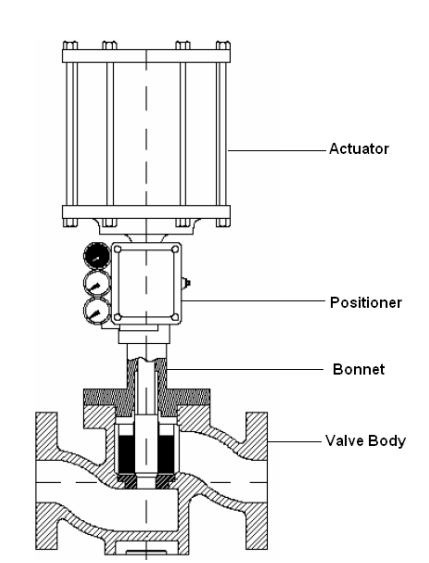
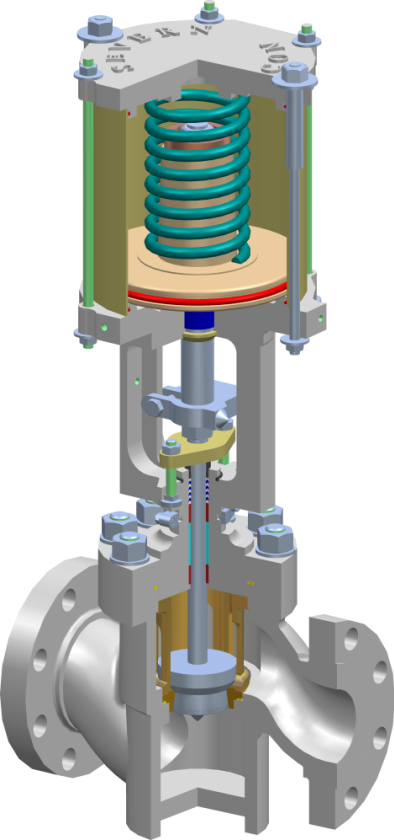
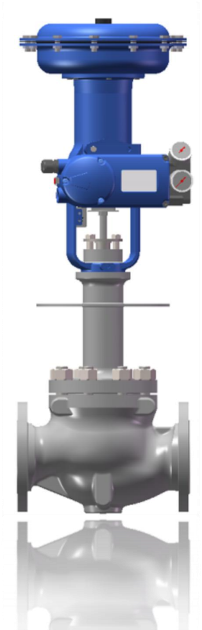
A typical control valve assembly consists of:
- Valve body
- Actuator (pneumatic, electric, or hydraulic)
- Positioner or control accessories
It operates automatically by receiving signals from control systems such as DCS or PLC, adjusting the valve position to maintain desired process conditions.
2. What is a Regulating Valve?
A regulating valve is a more function-oriented term.
It generally refers to any valve used to regulate flow or pressure to maintain a desired operating condition.
In practice:
- It can be manually operated
- Or automatically controlled
In most industrial applications, especially in automated systems, regulating valves are essentially control valves.
3. Key Differences Between Control Valve and Regulating Valve
The main differences lie in terminology and context:
3.1 Concept Focus
- Control valve: emphasizes its role in an automated control system
- Regulating valve: emphasizes the function of regulation
3.2 Usage Context
- “Control valve” is widely used in instrumentation and automation engineering
- “Regulating valve” is often used in a more general or descriptive context
3.3 Industry Standard
In industries such as oil & gas, petrochemical, and refining:
“Control valve” is the more standardized and widely accepted technical term
4. Practical Considerations in Engineering
In real projects, the terminology itself is less important than actual performance.
Key factors include:
- Control accuracy
- Stability under varying operating conditions
- Reliability in harsh environments (high temperature, high pressure, corrosive media)
- Proper valve selection and sizing
In many cases, performance issues are not caused by the valve itself, but by improper selection or mismatch with actual operating conditions.
In summary:
- A control valveis a system-oriented concept
- A regulating valveis a function-oriented description
In modern industrial automation, the two terms often overlap, but “control valve” is the preferred term in technical documentation and engineering communication.
In your projects, have you ever experienced:
- Unstable control performance?
- Insufficient regulation accuracy?
- Delayed valve response?
These issues are often related not only to the valve itself, but also to application conditions and system integration.
If you are facing similar challenges in your projects, feel free to contact us for further discussion.
 How to Choose the Right Control Valve for High-Pressure Petrochemical Applications
 Introduction to Maintenance of Electric Actuators
 Domestic Valves in Industrial Applications: A Practical Sourcing Guide for Global Buyers
 How Triple‑Eccentric Butterfly Valves Achieve High‑Performance Modulation