
The Steel Joints of Coal Chemical Industry: A Complete Guide to How Valves & Instruments Govern the Entire Process Flow
When people talk about coal chemical plants, they picture massive gasifiers, crisscrossing pipelines and towering process columns. Yet it is often the inconspicuous valves and instruments that determine whether this complex industrial system can operate safely, stably and efficiently.
Acting as the plant’s hands, limbs and eyes, they are the unsung hidden champions of the coal chemical sector.
How Harsh Is the Coal Chemical Operating Environment?
Simply put, coal chemical processing converts solid coal into gaseous/liquid fuels and chemical products — a process fraught with extreme operating challenges:
- High pressure: Units such as gasification and shift conversion run at 4.0–8.0 MPa
- Ultra-high temperature: Gasifier internal temperatures reach 1300–1600°C
- Severe corrosion: Process fluids contain hydrogen sulfide, carbon dioxide, chloride ions and other corrosive components
- Heavy abrasion: Black water and grey water carry large volumes of solid ash particles
- Complex media: Ranging from crude syngas, black/grey water and catalyst slurries to various oil products
Under such brutal conditions, standard industrial valves may fail within just three days.
Coal Chemical Valves: Purpose-Built Specialists
Coal chemical valves are far more than ordinary industrial valves with modified casings. Selecting the correct valve model requires precision akin to delicate surgery:
- Lock Hopper Valves
Deployed on gasifier slag discharge systems, these are the ultimate heavy-duty workhorses of the valve industry. They endure frequent cycling, extreme heat and pressure, and media loaded with hard abrasive particles. Superior tight shutoff and extended service life are mandatory; any failure will force a full gasification plant shutdown.
- Black/Grey Water Valves
Engineered specifically for solids-laden process fluids. Valve bodies and internal trims demand exceptional wear and erosion resistance, with hardfacing alloys and ceramics widely adopted as core construction materials.
- Oxygen Service Valves
Oxygen pipelines in coal chemical plants operate at high pressure and flow velocity, imposing extremely stringent requirements on valve metallurgy and complete degreasing treatment. Even a tiny trace of grease can trigger catastrophic explosions.
- Wear-Resistant Ball Valves, Disc Valves & Eccentric Rotary Valves
Each excels in unique applications including pulverized coal and fly ash conveyance. Selection is determined by media properties, differential pressure, temperature and other process parameters to match the optimal valve design.
Instruments: The Process’s Eyes & Nerve Endings
Without accurate measurement from instruments, valves cannot execute precise control actions. Within coal chemical facilities:
- Pressure transmitters: For high-pressure, dusty, crystallization-prone environments, proper pressure sensing architecture and diaphragm seal assemblies are critical design considerations
- Temperature sensors: Wear resistance, vibration immunity and fast response are core criteria when selecting thermocouples or resistance temperature detectors (RTDs)
- Flow meters: Orifice plates, vortex meters, ultrasonic and Coriolis mass flow meters all have distinct use cases. No single universal meter exists to handle dirty media, large pipe diameters and wide flow rate ranges
- Level gauges: Double-flange differential pressure, radar and gamma-ray level transmitters deliver reliable readings under high temperature, high pressure, agitated fluid and heavy scaling conditions
- Analytical instruments: Online gas chromatographs, infrared analyzers and laser oxygen monitors provide real-time composition analysis data, the backbone of safe plant operation and chemical reaction regulation
Valves & Instruments: Perfect Collaborative Partners
Modern coal chemical plants feature full automation, creating tight synergy between valves and measuring instruments:
- Valve positioners: Receive 4–20mA analog signals from the Distributed Control System (DCS) to precisely modulate valve opening
- Limit switches: Transmit discrete open/closed valve status signals to the control system via dry contacts
- Solenoid valves: Actuate pneumatic supply on/off per control logic to enable rapid valve stroke
- Smart instruments and intelligent valves communicate bidirectionally with the central control system, supporting complex sequence control, safety interlock logic and closed-loop regulatory control schemes
Why These “Steel Joints” Are Indispensable
- Operational Safety
Coal chemical processes involve extreme heat, high pressure and flammable, explosive media. Internal valve leakage or false instrument readings can lead to catastrophic safety incidents.
- Operational Stability
Single coal chemical plants often require capital investments in the billions. Unplanned shutdowns incur daily economic losses running into millions. The reliability of valves and instruments directly underpins long-term stable, full-load, optimized plant performance.
Precise control valves and high-precision online analytical instruments are fundamental to tight-margin process operation, maximizing product yield and cutting energy consumption.
Conclusion
The coal chemical industry is advancing toward high-end product development, diversified production and low-carbon transformation. No matter how process technologies evolve, valves and instruments remain the plant’s most dependable hands and eyes.
As the vital steel joints of coal chemical facilities, they operate relentlessly amid harsh extreme conditions to safeguard the safety and efficiency of the entire production flow. Next time you pass a sprawling coal chemical complex, take a moment to recognize the small yet critical valves and instruments tucked within its pipelines.
Every precise measurement signal and every dependable valve stroke forms the solid foundation of consistent, reliable coal chemical production.
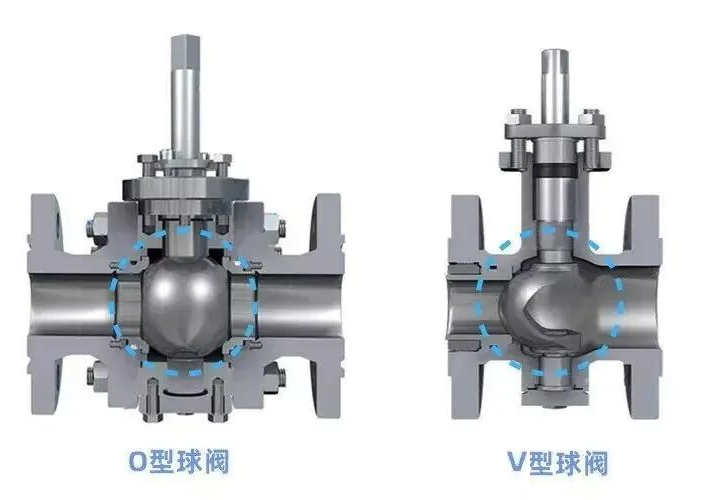 One Article to Quickly Grasp The Differences Between O-type and V-Type Ball Valves
 Introduction to Maintenance of Electric Actuators
 Domestic Valves in Industrial Applications: A Practical Sourcing Guide for Global Buyers
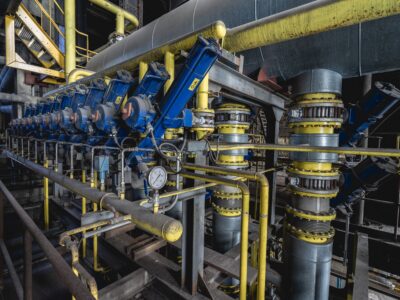 How Triple‑Eccentric Butterfly Valves Achieve High‑Performance Modulation