
Domestic Valves in Industrial Applications: A Practical Sourcing Guide for Global Buyers
The Hidden Cost of a Bad Valve Decision
Every plant engineer knows the scenario: a supposedly reliable valve fails during a critical batch process, causing unplanned downtime, product loss, and a frantic call to procurement. While global brands often dominate the specification sheet, the reality is that Domestic manufactured valves from China — now play a significant role in complex industrial systems. The challenge for international buyers is not whether to consider them, but how to evaluate them without falling into the trap of low-cost, low-quality procurement. This guide cuts through the noise to give you a practical framework for assessing domestic valve manufacturers based on hard data, not marketing claims.
Reading the Spec Sheet: Parameters That Matter
When reviewing a quotation for domestic valves, do not get distracted by the finish or the size of the flange. Focus on the technical parameters that directly affect your process safety and operational efficiency. First, understand the pressure-temperature rating. A valve rated for PN16 at ambient temperature may have a significantly reduced working pressure at 300°C. Always request the full pressure-temperature chart, not just the nominal rating. Second, check the leakage class. For shut-off valves, specify the required leakage rate according to ISO 5208 or API 598. If you need a Class VI bubble-tight seal, ensure the manufacturer is quoting for that specific test, not just a generic low-leakage claim.
Third, examine the flow coefficient (Cv or Kv). Many domestic manufacturers provide this data, but it is crucial to verify if the value is based on actual testing or derived from theoretical calculations. Ask for the test procedure and the medium used (water, air). Fourth, consider the actuation interface. If you are retrofitting an existing plant, the mounting dimensions per ISO 5211 must match your actuator. A mismatch here leads to expensive adapter plates and potential torque transmission issues.
Material Traceability and Certification
Material composition is non-negotiable. For corrosive media, a simple ‘CF8M’ designation is insufficient. You need the actual mill test certificate (MTC) showing the chemical composition and mechanical properties of the specific heat lot. Reputable domestic manufacturers will provide this documentation without hesitation. If they are vague or charge extra for it, that is a red flag. For high-pressure or cryogenic services, ask about impact testing at low temperatures. The difference between a standard casting and a properly certified one can be the difference between a safe operation and a catastrophic failure.
Standards: Bridging the Gap Between GB and API
One of the most common points of confusion for international buyers is the relationship between Chinese national standards (GB) and international standards like API, ASME, and ISO. It is a misconception that GB standards are inferior. In many cases, they are harmonized with or even stricter than their international counterparts. For example, the current standard for industrial valves, GB/T 12237, for steel flanged and butt-welded ball valves, aligns closely with API 608. However, the key difference lies in the testing and inspection frequency. When you specify ‘API 6D’ for a pipeline valve, you are not just specifying the design; you are specifying a set of quality assurance procedures and third-party inspection protocols.
For a 国产阀门 to be a valid alternative, verify which standard the manufacturer actually uses for production and testing. If they claim compliance with API 608, ask for their API monogram license number. If they are using GB/T 12237, ask for a comparison chart showing the equivalence in key areas like wall thickness and seat leakage testing. Many top-tier domestic factories in Wenzhou and Shanghai hold both certifications and can produce valves to either standard. The price difference usually reflects the level of inspection and documentation required.
Application-Specific Selection: Don’t Use a Hammer for a Screw
The application determines the valve type and material, not the other way around. For general industrial water and air service with moderate temperatures, a cast iron or ductile iron gate valve from a domestic supplier offers excellent value. However, for steam service, you must move to a forged steel or cast steel globe valve with a proper disc design to handle the high velocity and potential for water hammer. For chemical dosing lines with aggressive acids, a diaphragm valve or a fully lined ball valve is the only safe choice, regardless of where it is manufactured.
Specific Scenarios for Domestic Valves
- HVAC and Cooling Water: Domestic butterfly valves with EPDM seats are a cost-effective choice. Ensure the disc is properly centered and the shaft is sealed against the medium. Check for the ISO 5211 top flange for actuator mounting.
- Oil and Gas (Non-Critical Services): For instrument air and utility lines, domestically produced forged steel gate valves (Class 800) are reliable. Verify the thread type (NPT vs. BSP) to avoid connection issues.
- High-Purity and Sanitary: If you need sanitary valves for food or pharmaceutical applications, look for domestic manufacturers specializing in 3A or EHEDG compliant designs. The surface finish (Ra < 0.8 µm) and the type of gasket material are critical. Do not assume all ‘stainless steel’ valves are suitable for sanitary service.
When in doubt, ask the manufacturer for a list of reference installations. A credible domestic manufacturer will have a portfolio of projects, often including export projects to the Middle East, Southeast Asia, or Africa. If they only have local references, that is not necessarily a disqualifier, but it means you should request a prototype or a factory acceptance test (FAT) for your specific application.
Factory Audits and Quality Control: Seeing is Believing
You cannot judge a valve by its catalog photo. The most effective way to ensure quality is to conduct a virtual or physical factory audit. During the audit, do not just look at the assembly area. Walk through the machining shop to check the CNC machines and the skill of the operators. Look at the foundry (if they have one) and check their process for controlling the chemical composition of the molten metal. Many top-tier domestic manufacturers invest heavily in testing equipment, including spectrometers, hydrostatic test benches, and pneumatic test rigs. Ask to see a live test of a valve in your size range.
Pay attention to the in-process inspection points. A good quality control plan will include checks at raw material intake, after machining, during assembly, and after final testing. Ask for the QA/QC plan and identify the hold points where you want to be notified for inspection. This level of engagement will separate the serious, export-ready factories from the low-end assemblers.
Logistics and After-Sales Support: The Final Piece
Price per unit is only one part of the total cost of ownership. Consider the lead time. A domestic Chinese manufacturer might offer a lead time of 30 days, but add 30–45 days for ocean freight to the US or Europe. Factor that into your project schedule. More importantly, discuss spare parts. For a critical valve, ask about the availability of repair kits (seats, seals, packing). Will the manufacturer stock these parts for future orders? What is the warranty period, and how do they handle warranty claims for international customers? A company that offers a clear, written warranty policy and has a local agent or distribution partner in your region is a safer bet than one that only communicates via email.
Unlocking Value with a Strategic Approach
Selecting 国产阀门 is not about taking a risk; it is about leveraging the advanced manufacturing capabilities available in China to optimize your cost structure. The key is to treat them with the same rigor you would apply to any premium brand. Define your technical requirements clearly, demand proper documentation, and verify the manufacturer’s capabilities through audits and testing. By focusing on parameters, standards, and application fit, you can confidently integrate domestic valves into your global operations.
Ready to source high-quality valves for your next project? Contact our engineering team today for a detailed specification review and a comparative quote against your current supplier. We help you bridge the gap between cost and performance.
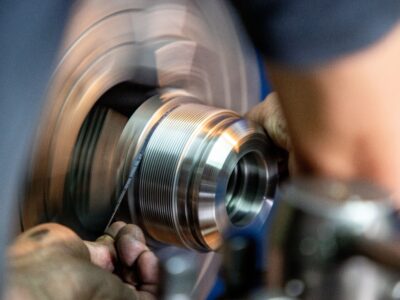 Leakage at Valve Packing Gland and Its Preventive Measures
 Introduction to Maintenance of Electric Actuators
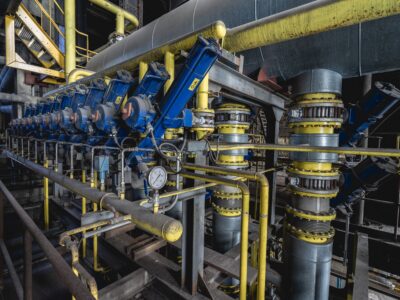 How Triple‑Eccentric Butterfly Valves Achieve High‑Performance Modulation
 How to Choose an Industrial Instrument Supplier? A Complete Guide from Selection to Service