
Don’t Just Look at the Quote! These 6 Hidden Service Details from Industrial Valve Suppliers Determine the Success or Failure of Your Project
In the vast systems of the process industry, valves are often referred to as the “hands and feet of the production process”; their reliability and precision directly determine a production line’s safety margin and operational efficiency. However, simply purchasing a high-performance valve is not enough to establish a complete control loop. The value of a professional industrial valve supplier has long extended beyond the provision of individual equipment to include comprehensive solutions such as actuator matching, feedback, explosion-proof isolation, and full lifecycle maintenance. With the widespread adoption of smart manufacturing and Safety Instrumented Systems (SIS), selecting a supplier with deep automation integration capabilities has become a core challenge for process control engineers and procurement managers.
Valves Are No Longer Isolated: From Mechanical Components to Smart Terminals
Traditionally, valves were viewed as purely mechanical components, but in today’s modern factories, they are rapidly evolving into networked smart terminals. The widespread adoption of fieldbus protocols (such as Profibus PA and HART) has made bidirectional data exchange between valve positioners, limit switches, and DCS/PLC systems the norm. This means that industrial valve suppliers must possess expertise in both mechanical manufacturing and electronic communications.
In actual chemical or oil and gas projects, we frequently encounter commissioning delays caused by incompatibility between valve position feedback devices and control system protocols. Reputable suppliers will proactively verify, when providing the valve body, whether the配套 sensors and actuators support the expected digital communication protocols. For example, in hazardous areas (Zone 1/Zone 2), a valve’s explosion-proof position transmitter must not only be certified to Ex d (flameproof) or Ex i (intrinsically safe) standards but must also ensure that signal transmission remains stable and unaffected by electromagnetic interference. In such cases, selecting rigorously certified sensor components—such as the NCB series inductive sensors or the NBB series valve position transmitters from Pepperl+Fuchs—can effectively prevent production interlock shutdowns caused by false signal alarms.
Building an Intrinsically Safe Circuit: Matching Safety Barriers and Isolation Barriers
For demanding chemical plants, intrinsic safety is the preferred explosion-proof type. This requires suppliers to provide not only the valve body but also a complete energy-limiting circuit. When signals from the control room enter the hazardous area to drive the valve’s solenoid, they must undergo energy-limiting processing via a safety barrier. A responsible industrial valve supplier should be able to clearly explain the Zener diode parameters of its safety barriers or the response time of its isolated safety barriers.
When selecting products, we recommend focusing on the following three parameters:
Termination resistance and accuracy of safety barriers: Ensure that the transmission accuracy of the valve position transmitter (e.g., 4–20 mA signal) is not compromised.
Completeness of explosion-proof certification: Not only must the valve body have ATEX or IECEx certification, but the accompanying sensors and cable entry devices must also hold certification of the same level.
Redundancy design capability: For circuits at SIL 2 and above, the supplier must provide detailed data on the safety barrier failure rate (such as the PFDavg value) to support Safety Integrity Level (SIL) calculations.
Selection Strategies for Harsh Operating Conditions: Materials Science Determines Lifecycle Performance
Corrosion, wear, and high temperature and pressure are the three major threats to industrial valves. Many companies focus solely on the unit purchase price while neglecting the total cost of ownership (TCO). Professional industrial valve suppliers will recommend more suitable valve trim materials based on the characteristics of the process medium (e.g., sulfur-containing crude oil or strong alkaline solutions). For example, in highly corrosive environments, although valve seat sealing surfaces made of Hastelloy or Monel have a higher initial cost, they can significantly reduce the massive losses caused by unplanned downtime.
Furthermore, for applications involving frequent regulation, suppliers should be capable of calculating the valve’s flow resistance coefficient (Cv value) and noise levels. Selecting an incorrect Cv value can cause the valve to operate at a partially open position for extended periods, leading to cavitation and vibration. A reputable supplier will use specialized software to simulate fluid dynamics and thereby recommend the most suitable valve plug design (e.g., V-type ball valve, cage-type seat).
Actuators and Accessories: The Overlooked “Last Mile”
More than 60% of valve failures are not caused by the valve body itself, but rather by the failure of the actuator and its accessories. This includes aging seals in pneumatic actuators, sticking solenoid valves, and clogged filter-regulator assemblies. Therefore, to assess the capabilities of an industrial valve supplier, one must evaluate its ability to integrate accessories. Does the supplier offer integrated smart valve positioners? Are limit switches and filter-regulator assemblies pre-installed as modular components?
In refining and petrochemical enterprises, we recommend using positioners equipped with online diagnostic capabilities. This solution enables real-time monitoring of valve stem friction, stroke deviation, and fluctuations in air supply pressure. If suppliers can simultaneously provide IoT-based predictive maintenance recommendations, this will significantly reduce the workload associated with manual inspections. For example, by integrating high-precision pressure transmitters and displacement sensors, the system can issue early warnings before a valve becomes stuck, thereby transforming unplanned repairs into planned maintenance.
The Supplier’s Role in Digital Transformation: The Extension of Data and Services
In the context of Industry 4.0, valves are no longer isolated field devices. Digital twin technology allows engineers to simulate valve wear cycles in a virtual environment. Consequently, the role of industrial valve suppliers has shifted from “selling products” to “selling services.” Suppliers must provide a digital documentation package containing factory test data for valves (such as leakage ratings and stroke times) and support the seamless import of this data into the plant’s asset management system (such as the SAP PM module).
Furthermore, the response time for spare parts is a key indicator of a supplier’s service capability. At project sites in remote areas, a shortage of a single seal can cause an entire production line to shut down. Excellent suppliers will customize critical spare parts inventory lists (such as valve seat seals, stem packing, and O-rings) for customers based on historical maintenance data and provide safe inventory management services. This level of in-depth supply chain collaboration can significantly reduce hidden costs for customers.
Explosion Protection and Functional Safety: Compliance Is an Absolute Must
As national regulations on workplace safety become increasingly stringent, compliance reviews for explosion-proof equipment are growing more rigorous. When selecting valves and related electrical accessories, it is essential to verify that they comply with the GB 3836 series of standards or the international IECEx standards. As a professional industrial valve supplier, it is essential to provide complete “Explosion-Proof Qualification Certificates” and “3C Certifications” (where applicable). It is particularly important to note that for flameproof (Ex d) products, power must be disconnected before opening the junction box cover, whereas intrinsically safe (Ex i) products allow for maintenance while energized. This difference directly impacts the safety of operations and maintenance procedures.
Regarding functional safety, suppliers should clearly disclose the SIL rating certification status of their valve products. For example, for valves used in emergency shut-off applications, the overall SIL capability of the valve body, actuator, and solenoid valve must meet the circuit requirements. If a supplier cannot provide a SIL certificate or only provides a certificate for a single component, this must be compensated for through a “redundant design,” which will undoubtedly increase system complexity and cost.
Conclusion and Action Recommendations: Establishing a Long-Term Technical Partnership
In summary, selecting an excellent industrial valve supplier essentially means choosing a technical partner who understands process engineering, automation, and explosion-proof regulations. During the early project phase, the supplier should participate in HAZOP analyses; during the commissioning phase, the supplier must provide on-site technical support; and during the operational phase, the supplier should offer rapid-response maintenance and repair services. This concerns not only the performance of the valves themselves but also the reliability of the entire control loop.
To ensure your project achieves the optimal balance between safety and efficiency, we recommend that procurement and engineering teams prioritize the supplier’s automation integration capabilities—particularly their ability to match sensors with safety barriers—as a key evaluation criterion. Visit chinaguanya.com to explore our curated selection of industrial valve solutions, including high-precision sensors and intrinsically safe explosion-proof barriers suitable for hazardous areas. Our team of engineers can provide one-on-one technical selection support and assist you throughout the entire process—from valve selection to system commissioning.
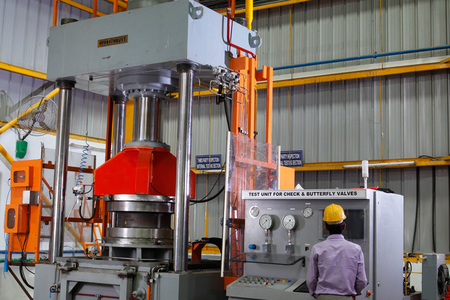 Certified vs. Non-Certified Industrial Valve Suppliers: What’s the Real Difference?
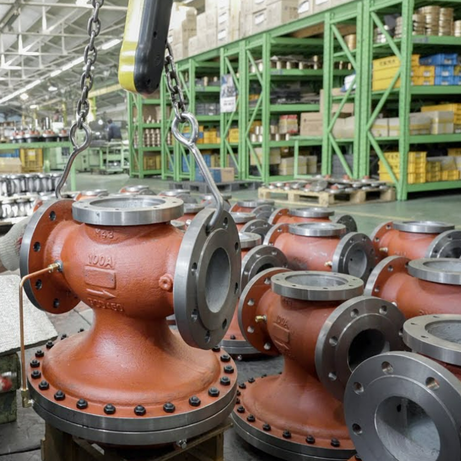 Top 10 Red Flags When Selecting an Industrial Valve Supplier for Your Project
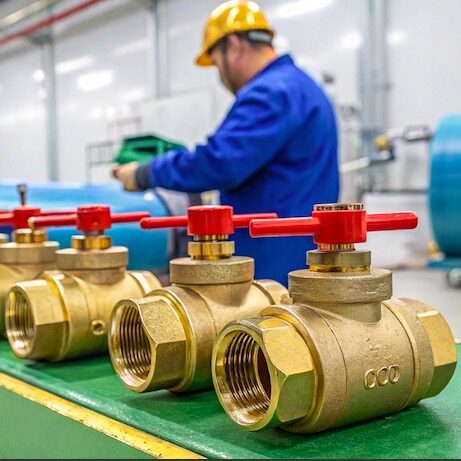 Evaluate the Specialty Industrial Distributor Company on Valves
 How to Choose the Right Industrial Valve Supplier: 7 Critical Factors You Must Know